
Benzoate Ester Plasticizers in the Plastic Industry: Performance, Benefits, and Applications
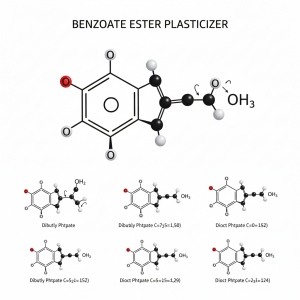
Among the various families of plasticizers, benzoate ester plasticizers have gained significant attention due to their superior solvating power, strong performance in polar polymers, and suitability as alternatives to traditional phthalate plasticizers. As global regulations shift toward safer and more environmentally friendly materials, benzoate esters have become an increasingly valuable solution for manufacturers seeking high performance with improved compliance. Their chemical structure offers excellent compatibility with a wide range of polymers—especially PVC, adhesives, vinyl-based resins, and engineering plastics. Compared to conventional plasticizers, benzoate esters stand out due to their:
- High solvating power
- Good extraction resistance
- Strong plasticizing efficiency
- Compliance with global safety standards (often non-phthalate)
How Benzoate Ester Plasticizers Work
Plasticizers function by inserting themselves between polymer chains, increasing chain mobility and softening the material. Benzoate esters excel at this due to their polar nature, which interacts effectively with polar polymer chains. This results in:
- Lower glass transition temperature (Tg)
- Improved flexibility
- Enhanced flow and melt processability
- Better clarity and surface appearance
Their strong solvating properties allow manufacturers to use lower dosages while still achieving excellent softness and elasticity.
Types of Benzoate Ester Plasticizers
Several benzoate ester variants are used in industrial applications, including:
- Dipropylene glycol dibenzoate (DPGDB)
- Diethylene glycol dibenzoate (DEGDB)
- Triethylene glycol dibenzoate (TEGDB)
- Benzoate blends (often mixed with phthalates or citrate plasticizers for specific performance needs)
Applications of Benzoate Ester Plasticizers
1. PVC and Vinyl Applications
Benzoate ester plasticizers are widely used in PVC and vinyl-based applications such as flooring materials, artificial leather and coated fabrics, flexible PVC films, wall coverings, vinyl gloves, and various consumer goods. Their high solvating power ensures excellent clarity, strong adhesion between polymer and additive, and stable long-term flexibility, making them ideal for both rigid and flexible vinyl products.
2. Adhesives and Sealants
In the field of adhesives and sealants, benzoate esters are preferred for use in pressure-sensitive adhesives, water-based adhesive systems, as well as caulks and sealants. They enhance critical performance characteristics such as tack, cohesion, open time, and overall workability, enabling better processing and application performance.
3. Plastisols
Benzoate esters serve as efficient non-phthalate alternatives in PVC plastisols used for dip molding, coating applications, printing inks, and automotive underbody compounds. Their compatibility with PVC allows for smooth gelation, consistent viscosity control, and improved durability in finished plastisol products.
4. Engineering and Specialty Polymers
Beyond PVC systems, benzoate ester plasticizers also show good compatibility with engineering and specialty polymers such as polyurethanes, acrylics, and nitrile rubber compounds. This versatility allows them to be used across a wide range of formulations requiring controlled flexibility and performance stability.
Key Benefits of Benzoate Ester Plasticizers
1. High Plasticizing Efficiency
Benzoate ester plasticizers provide strong solvating action, allowing excellent softening performance to be achieved even at relatively low dosage levels. This high efficiency helps optimize formulation costs while maintaining desired material flexibility.
2. Non-Phthalate Alternatives
As non-phthalate plasticizers, benzoate esters support manufacturers in meeting global regulatory and compliance requirements, particularly for consumer products and applications with strict safety standards.
3. High Heat and Extraction Resistance
Materials plasticized with benzoate esters exhibit strong resistance to heat and extraction, reducing the risk of plasticizer migration or leaching. This makes them suitable for high-wear environments and long-term applications.
4. Enhanced Mechanical and Aesthetic Properties
Products formulated with benzoate ester plasticizers typically demonstrate improved flexibility, higher mechanical strength, enhanced transparency, and superior gloss and surface finish. These characteristics contribute to both functional performance and visual quality.
5. Versatility Across Industries
Benzoate esters offer reliable and consistent performance across a wide range of industries, from flooring and construction materials to adhesives, coatings, and other specialty polymer applications.
Conclusion
Benzoate ester plasticizers play an increasingly important role in modern polymer processing. Their high efficiency, strong compatibility with polar polymers, and regulatory advantages make them a preferred choice for manufacturers seeking high-performing, safer plasticizing solutions. As industries continue to push for non-phthalate, environmentally responsible alternatives, benzoate esters stand out as one of the most effective and versatile options available today.
#palletplastik #plasticpallet #paletplastik #palletplastiksewa #palletplastikorisinil #palletplastikrecycle #palletsewa #sewapallet #sewapalletplastik #palletplastikindonesia #palletplastikinjeksi #palletplastikinjection #palletplastikhigienis #palletplastikdoubledeck #gudangsewa #palletplastikgudang #gudangcoldstorage #palletreversible