

Plastic Pallet Industry : Driving Efficiency and Sustainability In Modern Logistics
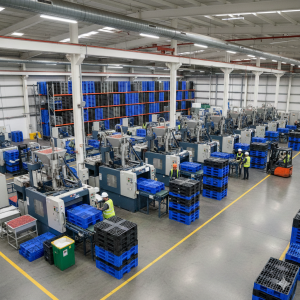
The plastic pallet industry has become a key contributor to modern logistics and supply chain systems. As global trade volumes increase and warehouse operations demand higher efficiency, plastic pallets offer a reliable alternative to traditional wooden pallets. Known for their durability, hygiene, and consistency, plastic pallets are widely used across industries such as food and beverage, pharmaceuticals, automotive manufacturing, chemical distribution, and export logistics. Their engineered design and material properties allow businesses to improve handling efficiency while maintaining safety and product integrity. With growing awareness of sustainability and operational efficiency, plastic pallets continue to gain market acceptance. Unlike wooden pallets, which are prone to splintering, moisture absorption, and pest infestation, plastic pallets provide long-term performance with minimal maintenance. This makes them especially suitable for automated warehouses and high-speed material handling systems.
Materials And Manufacturing Technologies
Plastic pallets are commonly manufactured using high-density polyethylene (HDPE) or polypropylene (PP). These thermoplastics offer excellent impact resistance, chemical stability, and structural consistency. Manufacturing processes typically include injection molding, structural foam molding, or thermoforming, depending on pallet size, load rating, and intended application.
Injection molding is widely used for producing high-precision pallets with uniform weight distribution and smooth surfaces, making them suitable for cleanroom and food-grade environments. Structural foam molding enables thicker walls and higher load-bearing capacity, often applied in heavy-duty industrial pallets. Thermoforming, on the other hand, is used for lightweight export pallets that require cost efficiency and recyclability. The industry also increasingly integrates recycled plastic into production without compromising performance, supporting circular economy initiatives and reducing reliance on virgin raw materials.
Functional Advantages In Logistics Operations
One of the primary benefits of plastic pallets is their dimensional accuracy and consistency. Unlike wooden pallets, which can vary in size and weight, plastic pallets maintain tight tolerances, enabling seamless integration with conveyors, automated storage systems, and robotic palletizers. This consistency reduces operational downtime and minimizes damage to goods and equipment.
Plastic pallets are also resistant to moisture, oils, acids, and most industrial chemicals. This makes them ideal for cold storage, pharmaceutical handling, and food processing environments where hygiene and cleanliness are essential. Their non-porous surfaces prevent contamination and allow easy washing and sanitization, supporting compliance with international hygiene standards. In addition, plastic pallets offer excellent long-term durability. They do not crack, splinter, or rot, allowing them to perform reliably across multiple reuse cycles. This longevity contributes to lower total cost of ownership when compared to disposable alternatives.
Sustainability and Environmental Impact
Sustainability has become a central focus of the plastic pallet industry. Many manufacturers now produce pallets from recycled plastics and design them for full recyclability at the end of their service life. This closed-loop approach significantly reduces plastic waste and supports responsible material management practices.
Reusable plastic pallets also reduce deforestation by replacing wooden pallets in high-volume logistics applications. Their long lifespan and resistance to damage help decrease the need for frequent replacement, leading to lower material consumption and reduced transportation emissions over time. Additionally, lightweight pallet designs contribute to fuel efficiency during transport, especially in export operations where freight weight directly impacts logistics costs and carbon footprint.
Industry Growth and Market Applications
The plastic pallet industry continues to expand due to increasing demand from sectors such as e-commerce fulfillment, cold-chain logistics, pharmaceutical distribution, and automated warehousing. As companies invest in smarter supply chains and digital logistics systems, the need for standardized, durable, and automation-friendly pallets becomes increasingly critical.
Export-driven industries also favor plastic pallets due to their compliance with international shipping regulations, eliminating the need for fumigation or heat treatment required for wooden pallets. This reduces border delays and simplifies documentation processes. As innovation continues, plastic pallets are being developed with advanced features such as RFID embedding, anti-slip surfaces, reinforced deck structures, and modular designs. These advancements further strengthen their role as essential components in modern logistics infrastructure.
Conclusion
The plastic pallet industry plays a vital role in shaping efficient, hygienic, and sustainable logistics systems worldwide. Through advanced materials, innovative manufacturing technologies, and growing environmental responsibility, plastic pallets deliver consistent performance across diverse industrial applications. As global supply chains evolve toward automation and sustainability, the plastic pallet industry is well positioned to remain a cornerstone of modern material handling and warehouse management systems.
#palletplastik #plasticpallet #paletplastik #palletplastiksewa #palletplastikorisinil #palletplastikrecycle #palletsewa #sewapallet #sewapalletplastik #palletplastikindonesia #palletplastikinjeksi #palletplastikinjection #palletplastikhigienis #palletplastikdoubledeck #gudangsewa #palletplastikgudang #gudangcoldstorage #palletreversible #palletplastikkuat #palletracking #rackingsystem