

Automated Pallet Systems: Driving Efficiency and Accuracy in Modern Warehousing
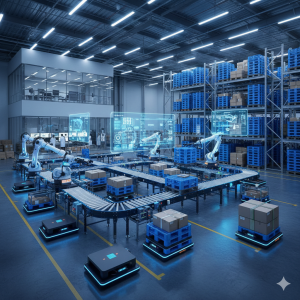
Automated pallet systems are a core component of modern warehouse and distribution operations, designed to optimize material handling through the integration of robotics, conveyors, sensors, and digital control platforms. These systems replace manual pallet movement and stacking processes with intelligent, machine-driven workflows that enhance speed, accuracy, and consistency. As supply chains evolve toward higher volumes, shorter lead times, and greater complexity, automated pallet systems provide the structural backbone for scalable and resilient logistics performance. Industries such as e-commerce, manufacturing, pharmaceuticals, food processing, and consumer goods distribution increasingly rely on automated pallet systems to support high-throughput operations. These systems enable warehouses to handle large volumes of goods while minimizing labor dependency, reducing errors, and improving workplace safety.
Core Components of an Automated Pallet System
An automated pallet system typically includes pallet conveyors, robotic palletizers and depalletizers, automated guided vehicles or autonomous mobile robots, and automated storage and retrieval systems. These components are controlled through warehouse management systems and programmable logic controllers that coordinate material flow in real time. Pallets move seamlessly between receiving docks, production lines, storage zones, and shipping areas without manual intervention. Sensors and vision systems ensure accurate pallet positioning, load stability, and barcode or RFID identification, enabling precise tracking and inventory visibility throughout the warehouse.
Role of Plastic Pallets in Automation
Plastic pallets play a critical role in automated pallet systems due to their dimensional consistency, uniform weight, and durable construction. Automation equipment requires predictable pallet geometry to function reliably, and plastic pallets meet this requirement far better than traditional wooden alternatives. Their smooth surfaces reduce friction on conveyors, while reinforced structures maintain stability during robotic lifting and stacking. Unlike wooden pallets, plastic pallets do not splinter, warp, or shed debris, minimizing machine downtime and maintenance requirements. This reliability improves system uptime and reduces the risk of product damage, making plastic pallets the preferred load carrier for automated environments.
Operational Benefits and Performance Improvements
Automated pallet systems significantly enhance warehouse efficiency by reducing manual handling and increasing processing speed. Pallet movements become faster and more accurate, allowing facilities to process higher order volumes with shorter turnaround times. Labor resources can be redirected from repetitive physical tasks to higher-value operational activities such as system monitoring and quality control.
These systems also improve load consistency and stacking accuracy, reducing product damage during storage and transportation. Automated pallet systems further enable continuous operations, including lights-out warehousing, where facilities operate with minimal human presence during off-hours, maximizing asset utilization and throughput.
Safety, Hygiene, and Compliance Advantages
By minimizing manual lifting and forklift traffic, automated pallet systems improve workplace safety and reduce the risk of injuries. Plastic pallets further support this benefit by eliminating sharp edges, exposed nails, and broken boards commonly associated with wooden pallets. Their smooth and uniform surfaces create safer interfaces with automated handling equipment. In regulated industries, automated pallet systems combined with hygienic plastic pallets enable compliance with food safety, pharmaceutical, and cleanroom standards. Plastic pallets resist moisture and chemical absorption, making them easy to clean and sanitize while maintaining product integrity throughout storage and distribution processes.
Sustainability and Long-Term Value
Automated pallet systems contribute to sustainability by improving energy efficiency, reducing material waste, and extending equipment life. Plastic pallets complement these objectives through their long service life, recyclability, and compatibility with closed-loop logistics systems. Their durability reduces pallet replacement rates and minimizes waste generation, supporting circular economy practices within modern supply chains.
Conclusion
Automated pallet systems represent a transformative solution for modern warehousing and logistics operations. By integrating intelligent automation technologies with durable and consistent plastic pallets, organizations achieve higher efficiency, accuracy, safety, and sustainability. As supply chains continue to evolve toward greater automation and digitalization, automated pallet systems will remain essential for building resilient, high-performance logistics infrastructures.
#palletplastik #plasticpallet #paletplastik #palletplastiksewa #palletplastikorisinil #palletplastikrecycle #palletsewa #sewapallet #sewapalletplastik #palletplastikindonesia #palletplastikinjeksi #palletplastikinjection #palletplastikhigienis #palletplastikdoubledeck #gudangsewa #palletplastikgudang #gudangcoldstorage #palletreversible #palletplastikkuat #palletracking #rackingsystem