
High Density Polyethylene (HDPE) and Its Application in the Plastic Pallet Industry
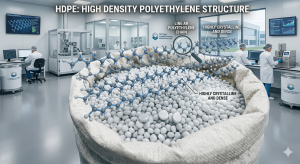
High Density Polyethylene (HDPE) is one of the most widely used thermoplastic materials in modern manufacturing. It is known for its strong molecular structure, durability, and resistance to various environmental conditions. HDPE belongs to the polyethylene family but has a higher density compared to other types such as Low Density Polyethylene (LDPE). Because of its strength and versatility, HDPE is used in a wide range of products, including containers, pipes, packaging materials, and industrial components. One of the most important applications of HDPE is in the production of plastic pallets used in logistics and warehousing industries.
HDPE has several unique characteristics that make it suitable for heavy-duty industrial applications. The material has a high strength-to-density ratio, which means it is relatively lightweight but still very strong. It also has good rigidity while maintaining a certain level of flexibility, allowing it to absorb impacts without breaking easily. Another important characteristic of HDPE is its resistance to environmental factors such as moisture, chemicals, and temperature variations. The polymer structure of HDPE makes it highly stable and less prone to degradation under normal industrial conditions. Because of these properties, HDPE is considered one of the most reliable materials for products that require long-term durability.
HDPE In Plastic Pallet Manufacturing Processes
In the plastic pallet industry, HDPE is commonly used as the main raw material in manufacturing processes such as injection molding and blow molding. During the injection molding process, HDPE pellets are heated until they melt and become a viscous liquid. The molten material is then injected into a mold cavity designed in the shape of a pallet. After cooling and solidifying, the pallet is removed from the mold with precise dimensions and structural strength.
HDPE is particularly suitable for these manufacturing processes because it flows smoothly when melted and solidifies without significant shrinkage. This property helps manufacturers produce pallets with consistent dimensions and high structural integrity. As a result, HDPE pallets are widely used in industries that require reliable and standardized material handling equipment.
Impact Resistance And Structural Strength
One of the key advantages of HDPE in plastic pallet production is its high impact resistance. In logistics operations, pallets are constantly exposed to heavy loads and mechanical handling from forklifts, pallet jacks, and automated systems. These operations can cause stress and impact on the pallet structure.
HDPE’s molecular composition allows the material to absorb shocks and resist cracking, even under repeated use. This makes HDPE pallets highly durable and suitable for long-term industrial applications. Compared to traditional wooden pallets, HDPE pallets are less likely to break or splinter, providing a safer and more reliable platform for transporting goods.
Moisture and Chemical Resistance
Another major benefit of HDPE is its resistance to moisture and chemicals. Unlike wood, HDPE does not absorb water, which prevents swelling, warping, or mold growth. This makes HDPE pallets ideal for environments with high humidity or exposure to water, such as cold storage warehouses, food processing facilities, and outdoor logistics operations. In addition, HDPE has strong resistance to many industrial chemicals, oils, and cleaning agents. This chemical stability allows plastic pallets made from HDPE to maintain their structural integrity even in demanding industrial environments. Because of this property, HDPE pallets are widely used in industries such as food and beverage, pharmaceuticals, and chemical manufacturing.
Hygiene Advantages In Industrial Applications
Hygiene is an important factor in industries that handle sensitive products such as food, beverages, and medical supplies. HDPE pallets offer significant hygiene advantages compared to wooden pallets. The smooth and non-porous surface of HDPE prevents contamination and allows the pallets to be easily cleaned and sanitized. Because HDPE does not splinter or produce dust, it also reduces the risk of product contamination. This makes HDPE plastic pallets a preferred solution for industries that must comply with strict hygiene and safety regulations. In many cases, plastic pallets made from HDPE help companies maintain better quality control in their supply chains.
Sustainability And Recyclability of HDPE
Environmental sustainability is becoming an increasingly important consideration in modern manufacturing. HDPE is a recyclable material, which means it can be processed and reused to produce new plastic products. Many plastic pallet manufacturers use a combination of virgin HDPE and recycled HDPE to optimize both performance and production costs. At the end of their service life, HDPE pallets can be collected, recycled, and converted into new plastic materials. This recycling capability helps reduce industrial waste and supports more sustainable manufacturing practices. As industries move toward more environmentally responsible operations, HDPE continues to play a key role in supporting circular economy initiatives.
Dimensional Stability For Logistics Systems
Another advantage of HDPE pallets is their dimensional stability. Because they are produced through controlled manufacturing processes, HDPE pallets have consistent sizes and shapes. This consistency is essential for modern logistics systems that rely on automated equipment such as pallet conveyors, robotic palletizers, and automated storage and retrieval systems. Uniform pallet dimensions help improve efficiency in warehouses and reduce operational disruptions. As automation becomes more common in logistics operations, the demand for high-quality HDPE plastic pallets continues to grow.
The Role of HDPE In the Modern Plastic Pallet Industry
Overall, High Density Polyethylene (HDPE) plays a critical role in the plastic pallet industry. Its combination of strength, durability, chemical resistance, and recyclability makes it an ideal material for producing pallets used in demanding industrial environments. HDPE pallets provide reliable support for goods transportation, improve hygiene standards, and contribute to more efficient logistics operations. As global supply chains continue to expand and industries increasingly adopt automated systems, the use of HDPE plastic pallets is expected to grow even further. With its proven performance and sustainability advantages, HDPE will remain one of the most important materials in the development of modern plastic pallet solutions.
#palletplastik #plasticpallet #paletplastik #palletplastiksewa #palletplastikorisinil #palletplastikrecycle #palletsewa #sewapallet #sewapalletplastik #palletplastikindonesia #palletplastikinjeksi #palletplastikinjection #palletplastikhigienis #palletplastikdoubledeck #gudangsewa #palletplastikgudang #gudangcoldstorage #palletreversible #palletplastikkuat #palletracking #rackingsystem #rentalpalletplastik