

Robotic Palletizer In Modern Industrial Automation
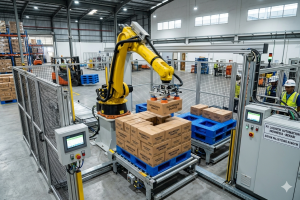
A robotic palletizer is an automated system designed to stack products onto pallets using industrial robots. This technology has become increasingly important in modern manufacturing and logistics operations because it improves efficiency, accuracy, and workplace safety. Instead of relying on manual labor to arrange products on pallets, robotic palletizers perform the stacking process automatically with high precision.
Many industries handle large volumes of packaged goods that must be organized onto pallets for storage or transportation. Robotic palletizers help streamline this process by ensuring consistent stacking patterns and reducing the time required for palletizing operations. As automation continues to expand in industrial environments, robotic palletizing systems are becoming a standard component in production lines.
Basic Working Principle
The working principle of a robotic palletizer involves a robotic arm equipped with a specialized gripper or end-of-arm tool. This robotic arm is programmed to pick up products from a conveyor line and place them onto a pallet according to a predetermined stacking pattern. The process typically begins when products such as boxes, bags, or containers arrive on a conveyor system. Sensors detect the position and orientation of the items, allowing the robotic arm to accurately pick them up. The robot then moves the product and places it onto the pallet in a specific arrangement to ensure stability and optimal use of pallet space. Once a pallet layer is completed, the robot continues stacking additional layers until the pallet reaches the desired height. After the pallet is fully loaded, it can be transported to the next stage of the logistics process, such as wrapping, storage, or shipment.
Main Components of A Robotic Palletizing System
A robotic palletizer consists of several essential components that work together to perform automated palletizing tasks. The most important component is the industrial robotic arm. This robot is responsible for the movement and placement of products onto the pallet. Another key component is the end-of-arm tool, commonly referred to as a gripper. The gripper is specifically designed to handle different types of products, such as cartons, bags, bottles, or containers. Some grippers use vacuum suction, while others rely on mechanical clamps or combination systems.
The conveyor system is also an important part of the palletizing process. It transports products from the production line to the robot and may include orientation devices to align items properly before they are picked up. Additional components may include pallet dispensers, slip sheet dispensers, safety fences, sensors, and control systems. These elements ensure smooth operation, safe working conditions, and efficient integration with the overall production line.
Advantages In Industrial Operations
One of the main advantages of robotic palletizers is increased productivity. Robots can operate continuously with consistent speed and precision, allowing companies to handle higher production volumes compared to manual palletizing. Another important benefit is improved workplace safety. Manual palletizing can involve repetitive lifting of heavy items, which increases the risk of injuries for workers. Robotic systems eliminate much of this physical strain by performing the heavy lifting automatically. Robotic palletizers also offer flexibility. They can be programmed to handle different product sizes, pallet configurations, and stacking patterns. This adaptability makes them suitable for industries with diverse packaging requirements. Additionally, robotic palletizing systems help improve stacking consistency. Uniform pallet loads reduce the risk of product damage during transportation and storage.
Applications Across Industries
Robotic palletizers are widely used in industries that require efficient packaging and distribution operations. The food and beverage industry frequently uses robotic palletizing systems to stack cartons, bottles, and packaged goods. In the consumer goods sector, robotic palletizers handle products such as household items, packaged foods, and personal care products. Manufacturing industries also use robotic palletizers to organize finished goods before shipping. Pharmaceutical companies benefit from robotic palletizers because they ensure precise and hygienic handling of packaged medical products. Logistics and distribution centers also use these systems to manage high volumes of palletized goods efficiently.
Conclusion
Robotic palletizers represent a significant advancement in industrial automation and material handling technology. By combining robotic arms, intelligent control systems, and specialized grippers, these systems automate the process of stacking products onto pallets with speed and precision. Their ability to improve productivity, enhance safety, and maintain consistent pallet loads makes robotic palletizers an essential tool in modern manufacturing and logistics operations.
#palletplastik #plasticpallet #paletplastik #palletplastiksewa #palletplastikorisinil #palletplastikrecycle #palletsewa #sewapallet #sewapalletplastik #palletplastikindonesia #palletplastikinjeksi #palletplastikinjection #palletplastikhigienis #palletplastikdoubledeck #gudangsewa #palletplastikgudang #gudangcoldstorage #palletreversible #palletplastikkuat #palletracking #rackingsystem #rentalpalletplastik