

Automated Flipping Machine In Industrial Material Handling
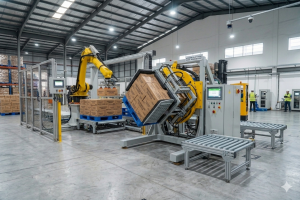
An automated flipping machine is an industrial device designed to rotate, tilt, or flip products or pallets automatically during manufacturing, packaging, or logistics processes. These machines are commonly used in industries where products must be turned over for inspection, processing, or repositioning before continuing to the next stage of production.
In modern industrial environments, automation plays a crucial role in improving efficiency and reducing manual labor. An automated flipping machine helps streamline operations by performing repetitive flipping tasks quickly and safely. This technology is widely used in manufacturing lines, warehouse operations, and packaging facilities where product orientation is important.
Basic Working Principle
The basic working principle of an automated flipping machine involves a mechanical system that rotates or tilts a product to a specified angle. The machine is typically integrated into a conveyor system so that items can be transported directly into the flipping unit. When a product or pallet enters the machine, sensors detect its position and ensure it is properly aligned. Once the item is secured, the flipping mechanism activates. This mechanism may use hydraulic, pneumatic, or electric motor systems to rotate the product. Depending on the design, the machine can rotate items by 90 degrees, 180 degrees, or even a full 360-degree rotation. After the flipping process is completed, the product is released and moved along the conveyor to the next stage of production or packaging.
Main Components of An Automated Flipping Machine
An automated flipping machine typically consists of several important components that enable its operation. One of the main components is the flipping mechanism itself, which may include rotating frames, clamps, or tilting platforms that hold the product securely during rotation. Another key component is the drive system, which provides the mechanical power needed to rotate or tilt the load. This system may use electric motors, hydraulic cylinders, or pneumatic actuators depending on the machine’s design and load capacity.
Sensors and control systems are also essential parts of the machine. These systems detect the presence of products, monitor their positions, and ensure the flipping process occurs safely and accurately. Additionally, many automated flipping machines are integrated with conveyor systems that feed products into and out of the flipping unit. Safety guards and emergency stop mechanisms are also included to protect operators and maintain safe operation.
Advantages In Industrial Operations
One of the primary advantages of automated flipping machines is improved productivity. By automating the flipping process, companies can reduce manual handling and maintain a consistent production flow. Another important benefit is enhanced workplace safety. Flipping heavy products or pallets manually can be physically demanding and may increase the risk of worker injuries. Automated systems eliminate much of this physical strain by performing the task mechanically.
Consistency is another key advantage. Automated flipping machines ensure that products are rotated to the correct angle every time, which is essential in manufacturing processes that require precise product orientation. These machines also help reduce product damage. Because the flipping process is controlled and stable, the risk of dropping or mishandling items is minimized.
Relationship With Plastic Pallets
In logistics and pallet-based handling systems, automated flipping machines are sometimes used to rotate plastic pallets (pallet plastik) or palletized loads. For example, a pallet may need to be flipped during inspection, cleaning, or product transfer processes. Plastic pallets are particularly suitable for automated flipping operations because they have consistent dimensions and strong structural integrity. Unlike wooden pallets, plastic pallets maintain their shape and do not splinter, which makes them safer for automated mechanical handling. Additionally, the smooth and uniform surface of plastic pallets allows automated machines to grip and rotate them more effectively. This improves operational reliability in automated warehouses and manufacturing facilities.
Applications Across Industries
Automated flipping machines are used in a wide range of industries. In manufacturing plants, they are often used to rotate products during assembly or quality inspection processes. In the packaging industry, these machines help reposition products before labeling, sealing, or palletizing. Warehousing and logistics facilities may also use flipping machines to handle pallets or containers efficiently. Food processing and pharmaceutical industries also benefit from automated flipping technology because it reduces manual handling and supports hygienic operations.
Conclusion
Automated flipping machines are valuable tools in modern industrial automation. By providing a reliable and efficient method for rotating products or pallets, these machines help improve productivity, safety, and operational consistency. When integrated with automated handling systems and plastic pallet logistics, automated flipping machines contribute to more efficient material flow and optimized industrial processes.
#palletplastik #plasticpallet #paletplastik #palletplastiksewa #palletplastikorisinil #palletplastikrecycle #palletsewa #sewapallet #sewapalletplastik #palletplastikindonesia #palletplastikinjeksi #palletplastikinjection #palletplastikhigienis #palletplastikdoubledeck #gudangsewa #palletplastikgudang #gudangcoldstorage #palletreversible #palletplastikkuat #palletracking #rackingsystem #rentalpalletplastik