

Plastic Pallets in Modern Logistics: Enhancing Efficiency, Hygiene, and Sustainability
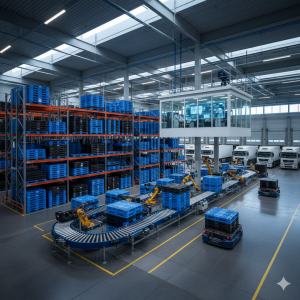
Modern logistics relies heavily on speed, accuracy, and reliability to meet the growing demands of global trade and e-commerce. In this environment, plastic pallets have emerged as an essential material-handling solution, replacing traditional wooden pallets in many advanced supply chains. Their consistent dimensions, clean surfaces, and long service life make them ideal for warehouses, distribution centers, and automated logistics systems that prioritize operational excellence and product safety.
As logistics operations become more complex and time-sensitive, companies seek equipment that can perform reliably across multiple environments. Plastic pallets support these requirements by offering superior durability, hygiene, and structural stability, making them well-suited for industries such as food and beverage, pharmaceuticals, electronics, retail distribution, and cold-chain logistics.
Compatibility with Automated and High-Speed Systems
One of the strongest advantages of plastic pallets in modern logistics is their compatibility with automation. Automated storage and retrieval systems, conveyor networks, robotic palletizers, and warehouse management software all require standardized load carriers to function efficiently. Plastic pallets are manufactured with precise tolerances, ensuring smooth movement through conveyors and racking systems without misalignment or equipment damage. Unlike wooden pallets, which may warp, crack, or shed debris, plastic pallets maintain their shape and surface integrity throughout repeated cycles. This reliability reduces machine downtime, minimizes product damage, and supports continuous, high-speed operations. In facilities where efficiency and uptime are critical performance indicators, plastic pallets provide measurable operational benefits.
Hygiene, Safety, and Regulatory Compliance
Modern logistics increasingly serves industries with strict hygiene and safety requirements. Food processing, pharmaceutical distribution, and medical supply chains demand equipment that resists contamination and supports easy sanitation. Plastic pallets offer non-porous surfaces that do not absorb moisture, oils, or chemicals, making them easy to clean and disinfect. Their splinter-free design also improves workplace safety by reducing the risk of injuries to warehouse workers. Additionally, plastic pallets comply easily with international shipping and export regulations because they do not require fumigation or heat treatment, unlike wooden alternatives. This simplifies cross-border logistics and accelerates customs clearance, supporting faster global distribution.
Durability and Total Cost of Ownership
In modern logistics, cost efficiency extends beyond purchase price to include durability, maintenance, and lifecycle performance. Plastic pallets are designed for repeated use, often lasting several times longer than traditional pallets. They resist cracking, corrosion, and environmental degradation, even in challenging environments such as cold storage, humid warehouses, and chemical handling zones. Although plastic pallets may involve a higher initial investment, their long service life, reduced repair needs, and lower replacement rates contribute to a favorable total cost of ownership. Their consistent weight and structure also support better load planning, improved stacking efficiency, and reduced transportation risks.
Sustainability and Environmental Responsibility
Sustainability is a core principle in modern logistics strategies, and plastic pallets play an important role in achieving environmental goals. Many manufacturers produce pallets from recycled plastics and design them for full recyclability at the end of their operational life. This supports circular economy models and reduces reliance on virgin raw materials. Reusable plastic pallets also decrease waste generation and minimize deforestation by reducing dependence on wooden pallets. Lightweight designs further contribute to lower fuel consumption during transport, helping organizations reduce their overall carbon footprint while maintaining logistics performance.
Conclusion
Plastic pallets have become a foundational component of modern logistics systems. Their compatibility with automation, superior hygiene standards, long-term durability, and sustainability advantages position them as an ideal solution for today’s fast-moving and data-driven supply chains. As logistics operations continue to evolve toward smarter, cleaner, and more efficient systems, plastic pallets will remain a critical enabler of operational excellence and global supply chain resilience.
#palletplastik #plasticpallet #paletplastik #palletplastiksewa #palletplastikorisinil #palletplastikrecycle #palletsewa #sewapallet #sewapalletplastik #palletplastikindonesia #palletplastikinjeksi #palletplastikinjection #palletplastikhigienis #palletplastikdoubledeck #gudangsewa #palletplastikgudang #gudangcoldstorage #palletreversible #palletplastikkuat #palletracking #rackingsystem