
Plastic Pallet (Pallet Plastik) Machine: The Core Technology Behind Modern Pallet Production
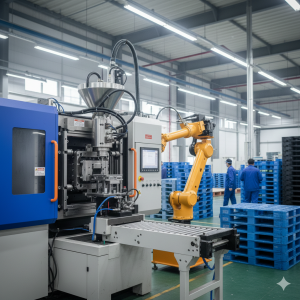
A plastic pallet machine is an industrial system designed to manufacture plastic pallets using thermoplastic materials such as HDPE (High-Density Polyethylene) or PP (Polypropylene). These machines typically operate through molding processes that shape melted plastic into standardized pallet forms. The machines are engineered to ensure uniformity, structural integrity, and repeatability in mass production environments. Depending on the production method, plastic pallet machines can vary in size, automation level, and output capacity. Modern systems are often fully automated, reducing labor requirements while increasing productivity and quality consistency.
Types of Plastic Pallet Machines
Injection Molding Machines
Injection molding is the most widely used method for producing high-quality plastic pallets. In this process, molten plastic is injected into a steel mold under high pressure. Once cooled, the pallet solidifies into a precise shape. This method is ideal for producing strong, detailed, and heavy-duty pallets.Compression Molding Machines
Compression molding machines use heat and pressure to shape plastic material inside a mold cavity. This method is commonly used for recycled plastic pallets and offers energy efficiency and lower production costs.Structural Foam Molding Machines
These machines create pallets with a foamed internal structure, making them lighter while maintaining strength. Structural foam pallets are often used in industries that require durability without excessive weight.
Key Components of a Plastic Pallet Machine
A typical plastic pallet machine consists of several important components that work together to ensure smooth operation:
- Injection Unit: Melts and injects plastic material into molds.
- Clamping System: Holds molds tightly during the forming process.
- Mold System: Determines the final shape, size, and design of the pallet.
- Cooling System: Controls temperature to ensure proper solidification.
- Automation Controls: Manage process parameters such as pressure, temperature, and cycle time.
These integrated systems ensure precise production while minimizing defects and material waste.
Advantages of Using Plastic Pallet Machines
Plastic pallet machines provide numerous benefits for manufacturers and supply chains. First, they enable mass production with consistent quality, ensuring every pallet meets industry standards. Second, they support the use of recycled plastic materials, making production more sustainable and environmentally friendly. Third, modern machines offer high automation levels, reducing labor costs and increasing efficiency. Additionally, advanced control systems allow manufacturers to optimize production cycles, improve energy efficiency, and reduce operational downtime.
Role in Modern Industry
Plastic pallet machines play a vital role in global logistics, warehousing, food processing, pharmaceuticals, and manufacturing sectors. As industries increasingly demand durable, hygienic, and reusable material handling solutions, the importance of these machines continues to grow. With ongoing technological advancements, future plastic pallet machines are expected to become even more energy-efficient, automated, and capable of handling diverse materials. This evolution will further strengthen their role as a cornerstone of modern industrial production systems.
#palletplastik #plasticpallet #paletplastik #palletplastiksewa #palletplastikorisinil #palletplastikrecycle #palletsewa #sewapallet #sewapalletplastik #palletplastikindonesia #palletplastikinjeksi #palletplastikinjection #palletplastikhigienis #palletplastikdoubledeck #gudangsewa #palletplastikgudang #gudangcoldstorage #palletreversible #palletplastikkuat #palletracking #rackingsystem